
Cape Coral, FL · Garage Door Service
When a Cape Coral Garage Door From the 80s or 90s Is Worth Saving
Cape Coral's housing stock runs 1970 to 2006, median 1985. Here's how to tell if your door from that era is worth repairing or past the point of it.
- Repairs & new doors
- Springs & openers
- Serving 5 nearby communities
How Local Conditions Play In
Most of the housing across this service area went up between 1970 and 2006, with the median build year sitting around 1985. That one number does a lot of work when you're deciding whether to fix a door or replace it. A door installed when a house in Trafalgar or Hancock went up in the mid-80s is now pushing 40 years old, and the hardware on it - rollers, hinges, the track gauge - is often lighter-duty than what gets installed today.
The climate here is a mild temperate band, which actually works in an old door's favor. There's no deep freeze-thaw cycle cracking panels or seizing springs the way you'd see in a harsher climate, so a steel door from 1985 that's been kept painted and the track kept clean can still be structurally sound. The failure points tend to be mechanical wear - springs, cables, rollers - rather than the panel itself falling apart from weather. That changes the math on repair versus replace: here, it's often worth fixing the moving parts and keeping the door.
Across the 24 named areas that make up this market, the housing stock is fairly consistent - mostly 1980s and 90s construction - so the same door-age calculus applies whether you're in Burnt Store or out toward Pelican.
Season by Season
Because this area sits in a mild temperate climate band, you don't get the seasonal swing that forces a yearly spring replacement cycle the way colder regions do. A torsion spring on an older Cape Coral door isn't fighting repeated freeze and expansion, so it can run longer before it fatigues and breaks. That's good news for a 1980s or 90s door - the spring itself may still have useful life in it even if other parts don't.
What does wear out on a schedule here is anything with a rubber or vinyl seal - bottom weatherstripping and the top seal - since steady warmth breaks those down faster than cold does. On an older door, check the seals before you assume the whole unit needs replacing. A $20 part can solve what feels like a bigger problem.
The lack of a hard winter also means homeowners in this area tend to go longer between garage door service calls than homeowners up north, which is part of why doors from the median 1985 build year are still in service at all. Less seasonal stress, longer life on the original hardware - as long as someone's kept an eye on the moving parts.
The Common Mistake
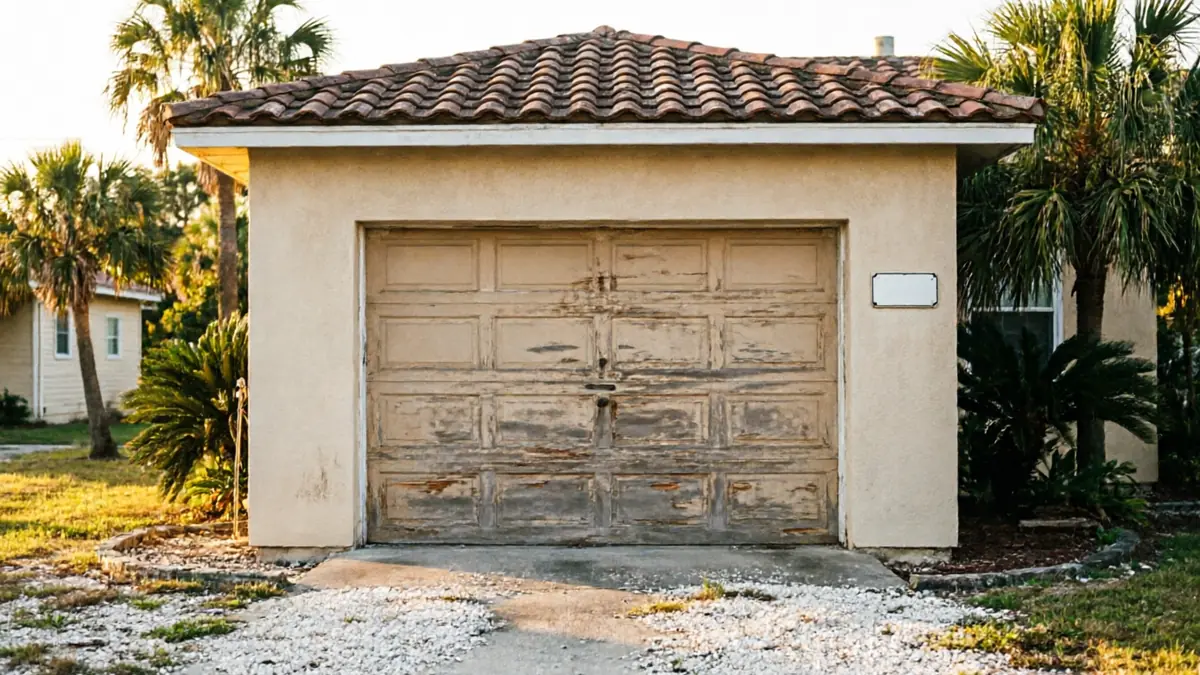
The mistake we see most with a door from the 1970-2006 building era is treating a noisy or slow door as a sign the whole unit is shot and needs full replacement, when it's usually one or two worn parts. A door built when a Cape Coral or Villas-area house went up in the mid-80s was built with heavier gauge steel and simpler mechanisms than a lot of what's sold today, and that's not automatically a downgrade. Rollers and hinges are wear items on any door of any age - replacing them doesn't mean the door is failing, it means it's due for the parts that are supposed to wear out.
The flip side mistake is holding onto a door well past when it's worth it. If the panels themselves are rusted through at the bottom, or the door is an old single-layer design with no insulation and the track is bent beyond adjustment, no amount of part-swapping fixes that. We won't sell a repair on a door that's structurally done - that's a replacement conversation, not a repair one. Knowing which situation you're in before you call saves you from both an unnecessary full replacement and a repair you'll be back in six months for.
The Situation
With median household income across the service area at $80,109 and roughly 43,800 owner-occupied houses among 85,866 total households, this is a market where most owners can afford to replace a door if it's genuinely done, but plenty choose to fix instead because the house doesn't need it yet. An older door that's otherwise sound - good panels, straight track, no rust through - is almost always worth repairing rather than replacing, because the labor and parts cost on springs, cables, or rollers is a fraction of a new door installed.
Where it stops being worth it: if you're already looking at a second or third spring replacement in a short span, if the opener is original equipment and failing alongside the door, or if the track has been bent and straightened more than once. At that point you're paying repair prices repeatedly for a door that's going to need full replacement anyway, just later and after more service calls. We'll tell you straight when we think that's where you are - it doesn't help either of us to keep patching something that's past it.
Frequently asked questions
Is it worth fixing a garage door from the 1980s or 90s?
Usually, yes, if the panels and track are in good shape. Most failures on a door that age are mechanical - springs, rollers, cables - and those are straightforward, inexpensive repairs. The mild climate here doesn't put the same wear on steel panels that harsher climates do, so the door body often outlasts the original hardware by a wide margin.
How do I know if my old door is too far gone to repair?
Rust through the bottom panels, a track that's been bent and straightened more than once, or an opener and door both failing at the same time are the signs. If you're on your second or third spring replacement in a short stretch, you're likely paying repair prices for a door that needs full replacement anyway.
Does Cape Coral's climate affect how long a garage door lasts?
It helps. The mild temperate climate here means no freeze-thaw cycle stressing springs and panels the way colder regions get, so doors from the 1970-2006 building boom often have more life left in the moving parts than their age alone would suggest. Seals and weatherstripping wear out faster from steady warmth, though.
Related garage door services in Cape Coral
More garage door guides
Book garage door service in Cape Coral
Call now or request a quote - tell us what the door is doing and where you are.