
Cape Coral, FL · Garage Door Service
Why a Door Goes Off Track Around Cape Coral
Cape Coral's 1970-2006 housing stock and mild coastal climate create specific off-track patterns. Here's what actually knocks a door loose, and when it's a track fix versus a bracket job.
- Repairs & new doors
- Springs & openers
- Serving 5 nearby communities
How Local Conditions Play In
Most of the garages in this market were built between 1970 and 2006, with the typical house dating to around 1985. That matters because a door going off track is almost never one dramatic event - it's hardware that's been quietly drifting for years, and a lot of what's out there is original to the house. Track brackets lag-bolted into framing back in the 80s and 90s weren't always set with shims, and thirty-plus years of door cycles will work a slightly off-plumb bracket looser.
The climate band here is mild temperate, which is a break compared to places that deal with real freeze-thaw. You won't get a slab heaving under the track the way you would up north. But stucco-and-frame construction from that era still shifts with humidity, and a garage door opening that's a few millimeters out of square puts side load on the rollers every time the door runs. That side load is what walks a roller out of the track, not a single storm or a single slam. It's cumulative, and it's tied directly to how this housing stock was built and how long it's been settling.
Season by Season
Because the band is mild and temperate rather than one with hard winters, there isn't a sharp seasonal spike the way there'd be with ice or heavy snow load on a track. What you get instead is a steadier year-round wear pattern, which is actually harder for homeowners to notice coming. A door that's drifting off-plumb in a cold climate often announces itself with a dramatic failure after the first freeze. Here, it just gets a little noisier, a little stiffer, a little more likely to catch a roller on the bottom bracket - and homeowners live with that creeping sound for months before it becomes a full off-track call.
The practical upshot: regular visual checks matter more here precisely because there's no seasonal trigger forcing the issue. If you notice the door running crooked, or one side lagging the other as it rises, that's the track telling you something before it jumps. Waiting through a mild season because "nothing dramatic happened" is how a bent track turns into a bent track plus a cracked panel.
The Common Mistake
The mistake we see most in houses from this 1970-2006 stretch is someone noticing a door that's rubbing or binding and forcing it - by hand, with the opener, or by tapping the track back into rough alignment with a hammer. On original hardware that's already thirty-plus years old, that's usually the move that finishes the job the slow drift started. A track that's slightly bent will hold a roller fine under normal load and then let go the first time it's forced through a tight spot.
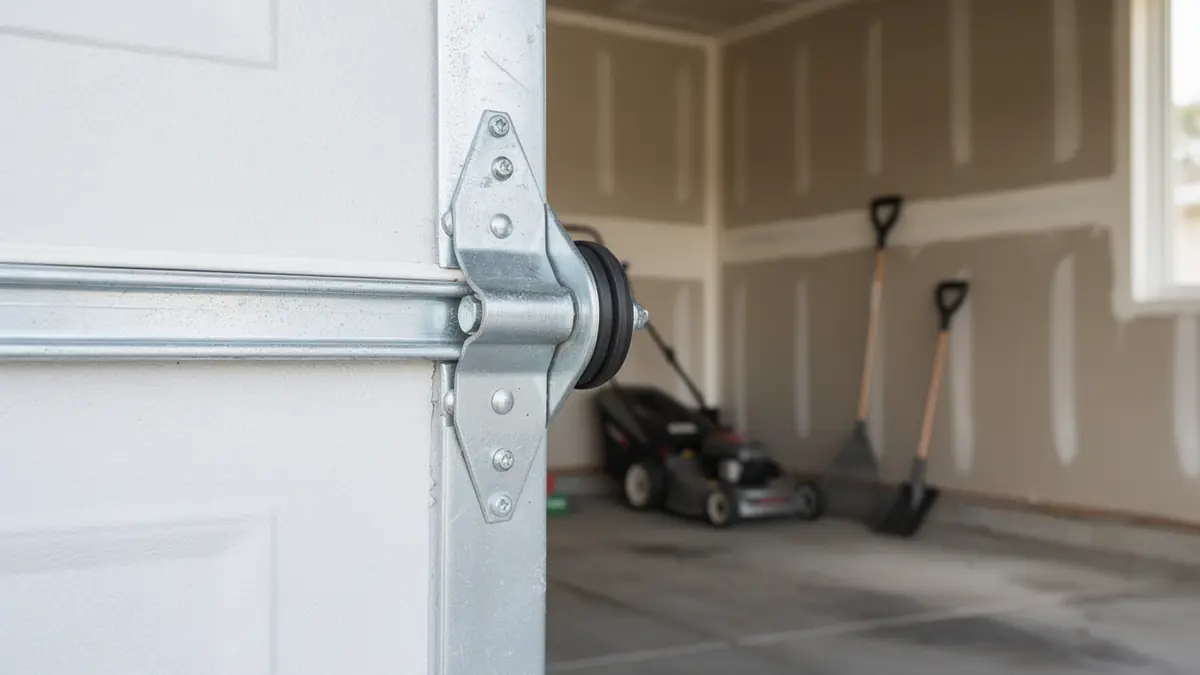
The other common one: treating a loose bracket as a track problem. On a lot of the 1980s and 90s builds in this area, the issue isn't the rail itself, it's the lag bolts in jamb framing that's moved a hair over the decades. Realigning the track without re-securing the bracket just buys a few weeks before it happens again. We won't pretend every off-track call needs a new track - plenty of the time it's a bracket and a half-inch of shim, and we'll say so rather than sell a bigger job.
The Situation
Across the 24 named areas that make up this service area, the housing stock runs heavy on that same mid-80s construction, so off-track calls here cluster around a handful of repeatable causes rather than one-off accidents. In neighborhoods like Trafalgar, just southwest of Cape Coral, and Mariner to the northeast, a lot of houses share the same era of stamped steel track and lightweight roller setup that was standard for production-built homes at the time.
If your door has come off track, the honest first question is whether the track itself is bent or just misaligned. A misaligned track can usually be reset and re-secured in a single visit. A bent track - especially if a roller has punched through the flange - generally needs replacement, because a track that's been bent once rarely holds true even after you hammer it back. We'll tell you which one you've got before we start work, not after.
Frequently asked questions
Why did my garage door suddenly come off track with no warning?
It rarely happens with no warning - it's usually a bracket or track that's been drifting for a while, especially on original hardware from the 1980s and 90s. The door runs a little crooked for weeks or months before a roller finally jumps the rail. By the time it looks sudden, the wear has been building.
Is a bent track something you can fix or does it need replacing?
If a roller has punched through the track flange or the rail is visibly kinked, we replace that section rather than hammer it straight, since a bent track rarely holds alignment afterward. If it's just out of plumb from a loose bracket, we can usually reset and re-secure it without replacing anything.
Does Cape Coral's climate affect how often doors go off track?
The mild temperate climate here spares you the freeze-thaw cycles that crack slabs and shift tracks up north, but humidity still works on the frame and brackets over time. It's more of a slow, steady wear pattern than a seasonal spike, which is why it's easy to miss until the door is visibly running crooked.
Related garage door services in Cape Coral
More garage door guides
Book garage door service in Cape Coral
Call now or request a quote - tell us what the door is doing and where you are.